

Public Commentary / 01 September 2026
How Can Legislation for Non-Urban Lands Help to Reduce Conflict in Nigeria?
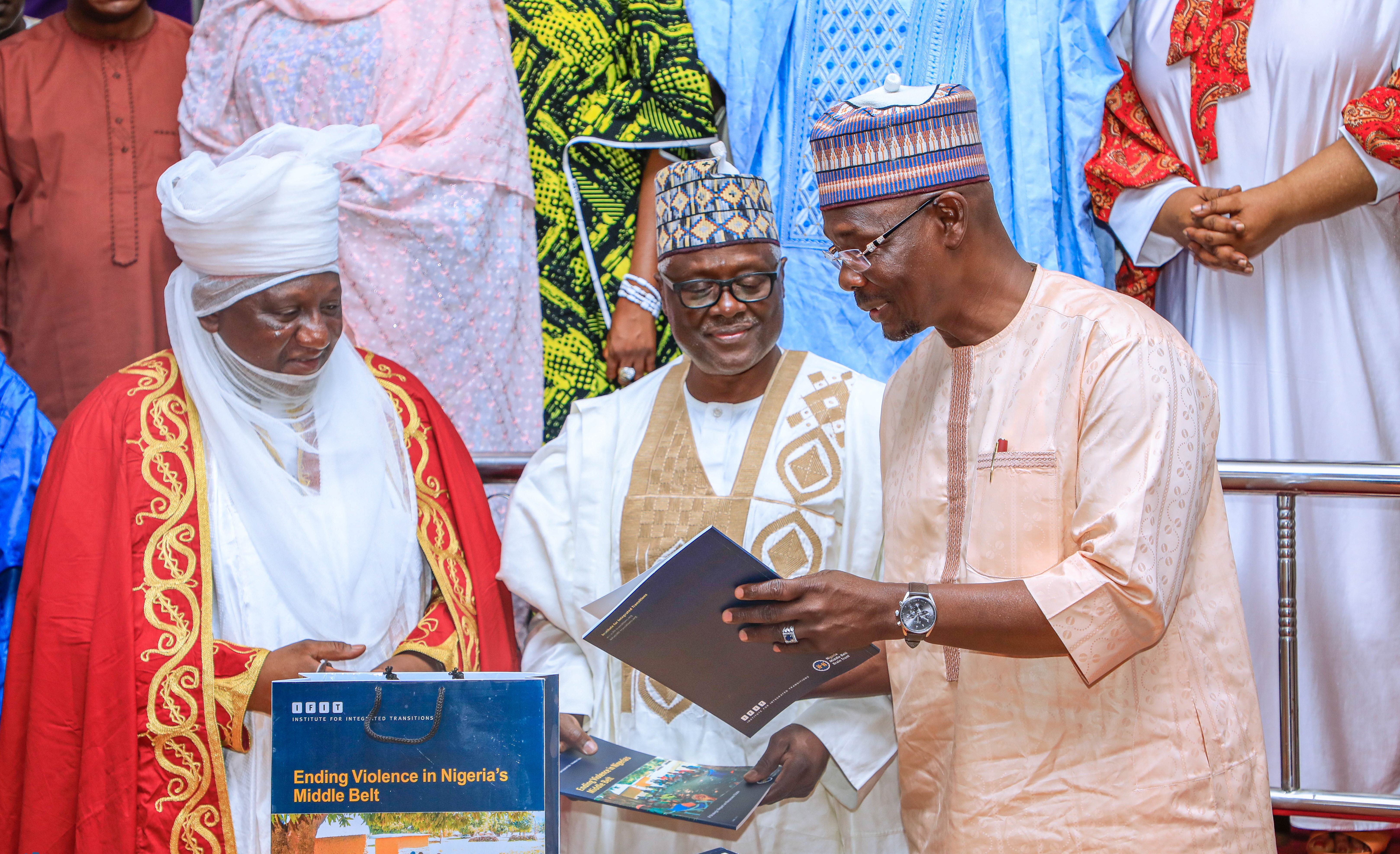
Q&A with IFIT’s Nigeria Country Manager, Thomas J. Bimba
September 1, 2026
Land administration is an important but often overlooked structural driver of rural conflict in Nigeria.
Across much of the country’s Middle Belt, uncertain boundaries, undocumented customary land interests and widespread displacement can turn local disputes over farmland, grazing routes and community territories into wider conflict.
But while most rural land in Nigeria is governed through customary tenure arrangements, these are neither clearly delineated nor captured in accessible government records.
Drawing on years-long in-country work, the members of IFIT’s Middle Belt Brain Trust developed a proposed “Non-Urban Lands Bill” to help address the gap.
IFIT senior adviser Seth Kaplan recently met with IFIT’s Nigeria country manager Thomas J. Bimba to discuss how the Bill emerged from IFIT’s work, what it has taken to bring the Bill before the Senate, and what comes next.
Seth Kaplan: Let’s start with the origin story. Where did the idea for the Non-Urban Lands Bill come from?
Thomas J. Bimba: Since 2018, IFIT has operated a unique local platform called the Middle Belt Brain Trust (MBBT): a cross-sectoral group of 14 recognised leaders from this critical region of Nigeria. It is a deeply reflective group, comprised of persons of great integrity and capacity.
For years, the group’s members have been working to unbundle the structural drivers of violence in Nigeria, using short-term actions to provide the evidence, building blocks, models, adaptability and, most importantly, the confidence to address the medium and long term.
This led them over time to ask a simple but important question: why do we only get temporary relief from violence? In most cases, communities are willing to live in peace so they can prosper, and government is making legitimate efforts to restore its authority and the rule of law. But we are often reacting to episodes of violence rather than working practically to reduce the deeper drivers.
As a result, we began to think harder about changing incentives—increasing those for peace and reducing those for violence. This would require changing the way institutions operate, resources are allocated and leaders behave.
Over time, it was this core insight that sparked our idea of developing a Non-Urban Lands Bill.
Seth Kaplan: What was IFIT seeing in the Middle Belt that convinced you and the MBBT that a new approach to rural land administration was needed?
Thomas J. Bimba: Violence in rural Nigeria keeps increasing and we can’t keep excusing it. A lot is being done, but the trajectory is sad. Substantial investments have been made to get different groups to live in peace, with credible evidence showing that some of these efforts have been successful. But why is the violence still increasing? Why are we missing out on the main goal, namely, a sustained reduction in violence?
Within our project team, we got to the point of seeing ourselves as part of the problem. How do we solve a problem that we have partly contributed to through our own actions or inaction?
To find the answer to that question, we had to carry out a difficult journey of introspection through which we had to confront our own biases and blind spots.
But the answers generated by the process were more than worth it, leading us to adopt a rural lens for the rural problems in our midst, and with a special focus on the question of land.
Seth Kaplan: How did IFIT turn its diagnosis into an actual piece of legislation?
Thomas J. Bimba: We have been fortunate. Core funding from donors such as Norway, Ireland and Humanity United gave us the first opportunity to explore, map the landscape, and pursue emerging opportunities. Later, with critical project funding from the UK and Germany, we were able to prototype, test and validate key ideas, including the question of how much of the violence in rural Nigeria revolves around the use of resources and the need for clear and recognised ownership and boundaries.
The draft Bill that we developed took time to conceive and prepare. It seeks to scale impact across rural Nigeria by providing a federal framework that enables an interoperable national database, alongside state-based legislation permitting states to carry out their constitutionally mandated responsibilities for mapping, delineation and verification of ownership records.
Seth Kaplan: Who did IFIT have to bring into the process and what did you learn from those consultations?
Thomas J. Bimba: Our goal has been to develop a Bill that solves the actual problems rural landowners face, as well as the problems government itself faces in administering these lands.
As such, we had to hear and learn from key stakeholders, especially traditional rulers at the community level, customary court officials, farmers, pastoralists, community youth and women. What are their pain points when it comes to the use, access and ownership of rural land? What are the most common disputes? What leads to violence?
The answers from these stakeholders included fears of dispossession, difficulties proving ownership and boundaries, and the need for guaranteed negotiated usage rights.
Technical and political experts on land issues also helped along the way, assisting us in framing the Bill to avoid conflict with existing constitutional provisions, especially the Land Use Act of 1978.
Seth Kaplan: Yet, land reform is notoriously difficult to advance in Nigeria. What has IFIT done differently to get the Bill this far?
Thomas J. Bimba: For us, it has been critical to develop an understanding of the deep power structures, hidden rules, informal networks and competing interests of the different players, while at the same time having the flexibility to adapt to political conditions on the ground.
It was this due diligence that helped us to think better about how to create political ownership and adopt the right framing. We also of course kept an eye out for windows of political opportunity and the management of identified risks.
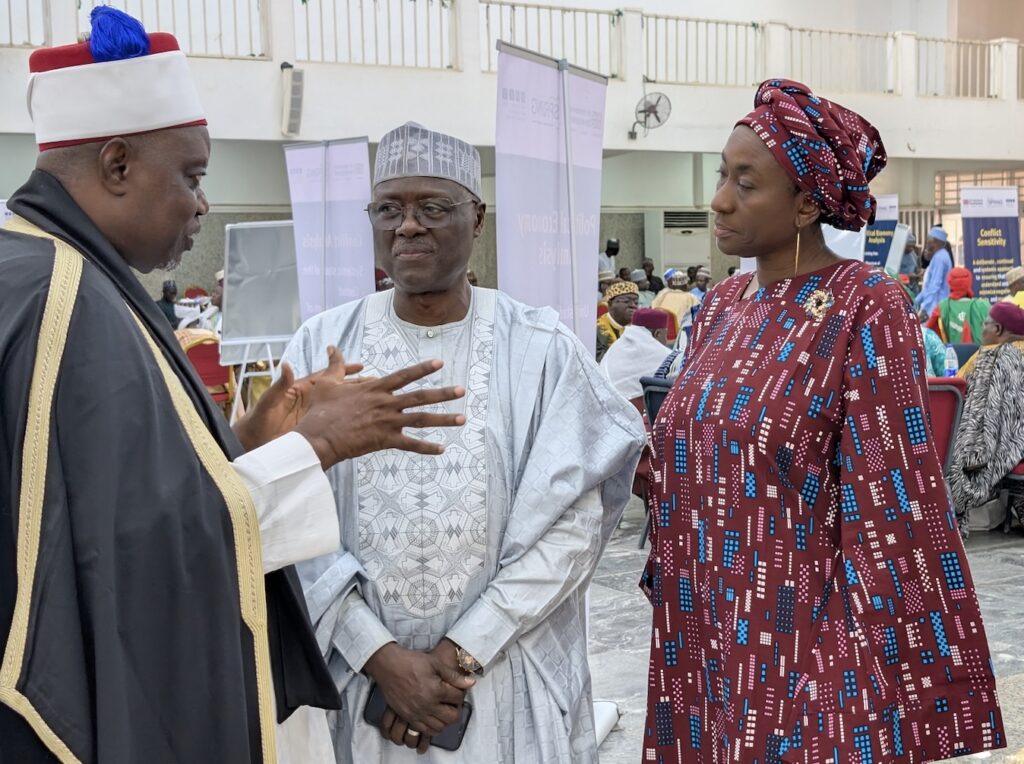
Seth Kaplan: What are some examples of what the Bill covers?
Thomas J. Bimba: Key areas we identified as necessary included clarity on safeguards to protect customary rights; protection of the rights of displaced or disadvantaged groups; transparency, inclusivity and institutional coordination in implementation; digital governance; and the formal recognition of undocumented rural holdings.
Seth Kaplan: What have you learned about the relationship between passing a federal law and making reform work in Nigeria’s states?
Thomas J. Bimba: As you know, Nigeria is a Federal Republic with 36 states and with constitutionally vested powers at both the federal and state levels.
The federal Land Use Act of 1978 is the foundational legal framework for land administration. It guides land administration and vests state governments with powers to administer land. But the focus of most Nigerian governments has been on administering urban and semi-urban land at the expense of rural land.
The problem? About 80% of Nigeria’s land is considered rural, and much of the violence IFIT and the MBBT are concerned with involves individuals and groups asserting their rights to use, access or own rural land and land resources.
We concluded that we needed a federal framework that would support a national database, but working side by side with state-based legal frameworks that guide and operationalise the delineation, survey, mapping, registration and documentation of non-urban lands according to each state’s unique needs and context.
By design, we had to act within a constitutional logic: federal legislation to provide the enabling environment and state-based legislation to operationalise it.
Seth Kaplan: What is needed now to help get the Bill across the line?
Thomas J. Bimba: Over the years, IFIT and the MBBT have carefully built the technical knowledge, political networks and broad trust among highly diverse stakeholders in the Middle Belt and in Nigeria more generally. This is helping us navigate the challenge of seeing the legislation pass.
We have also developed an important ability to convene key stakeholders and actors, including the elites needed to pass such important legislation and the stakeholders who will be most affected. We are committed to seeing this through, since the impact once the legislation is in place can be massively important for our country.
Seth Kaplan: Is there any urgency in this next critical phase?
Thomas J. Bimba: Yes, because we stand at a positive crossroad. We have a problem that everyone agrees exists. We have political leadership at the very highest levels that is open to change. And we have a window of opportunity to act before the end of the legislative calendar in May 2027.
On top of this, we see politicians who want to create a positive legacy for themselves by championing this legislation, knowing the potential benefits that it is expected to have for security, the economy, social cohesion and development planning.
In short, there is a “moment” we need to seize. And it is better to take advantage of the window of opportunity that already exists today than to invest heavily in trying to create another opportunity later, which may not come.