
Publication
/ Narratives
Sep 2026
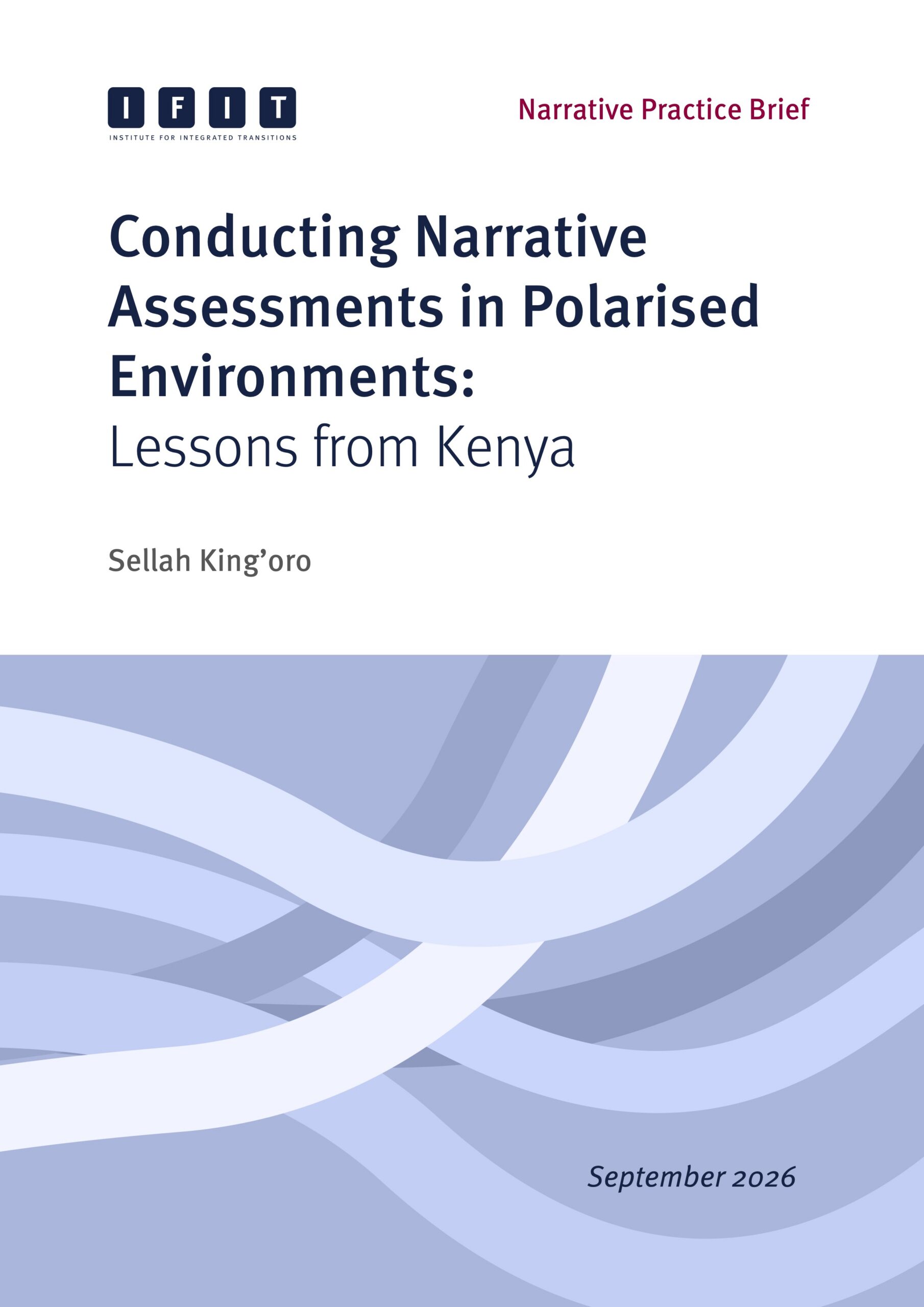
Conducting Narrative Assessments in Polarised Contexts: Lessons from Kenya
Narrative assessments map and analyse the deep stories, identity frames, and meaningmaking systems that shape how individuals and communities relate to one another and respond to political or social change. In polarised contexts like Kenya, which has been especially riven by ethnic tensions between the Luo and Kikuyu, they are crucial to understanding the narratives that drive conflict and developing effective peace interventions.
Based on lessons learnt from a narrative assessment conducted in Kenya by IFIT and the Kenyan Directorate of National Cohesion and Values, this practice brief equips peacebuilders, government officials, and other practitioners with the tools to identify dominant, counter- and emerging narratives in polarised contexts, while supporting ethical and sensitive engagements with communities whose narratives may be contested, painful or instrumentalised.
The brief provides practical, step-by-step guidance on how to design, conduct and analyse the findings of a narrative assessment, as a sound foundation for narrative transformation and peacebuilding efforts. It covers the process from selecting appropriate data collection methods and narrative mapping tools, to incorporating strong ethics protocols and trauma sensitivity, to analysing data and validating the findings.
The DOI registration ID for this publication is: https://doi.org/10.5281/zenodo.22227661
You may also be interested in
-
-
-
-
Narrative assessments map and analyse the deep stories, identity frames, and meaningmaking systems that shape how individuals and communities relate to one another and respond to political or social change. In polarised contexts like Kenya, which has been especially riven by ethnic tensions between the Luo and Kikuyu, they are crucial to understanding the narratives that drive conflict and developing effective peace interventions.
Based on lessons learnt from a narrative assessment conducted in Kenya by IFIT and the Kenyan Directorate of National Cohesion and Values, this practice brief equips peacebuilders, government officials, and other practitioners with the tools to identify dominant, counter- and emerging narratives in polarised contexts, while supporting ethical and sensitive engagements with communities whose narratives may be contested, painful or instrumentalised.
The brief provides practical, step-by-step guidance on how to design, conduct and analyse the findings of a narrative assessment, as a sound foundation for narrative transformation and peacebuilding efforts. It covers the process from selecting appropriate data collection methods and narrative mapping tools, to incorporating strong ethics protocols and trauma sensitivity, to analysing data and validating the findings.
The DOI registration ID for this publication is: https://doi.org/10.5281/zenodo.22227661